
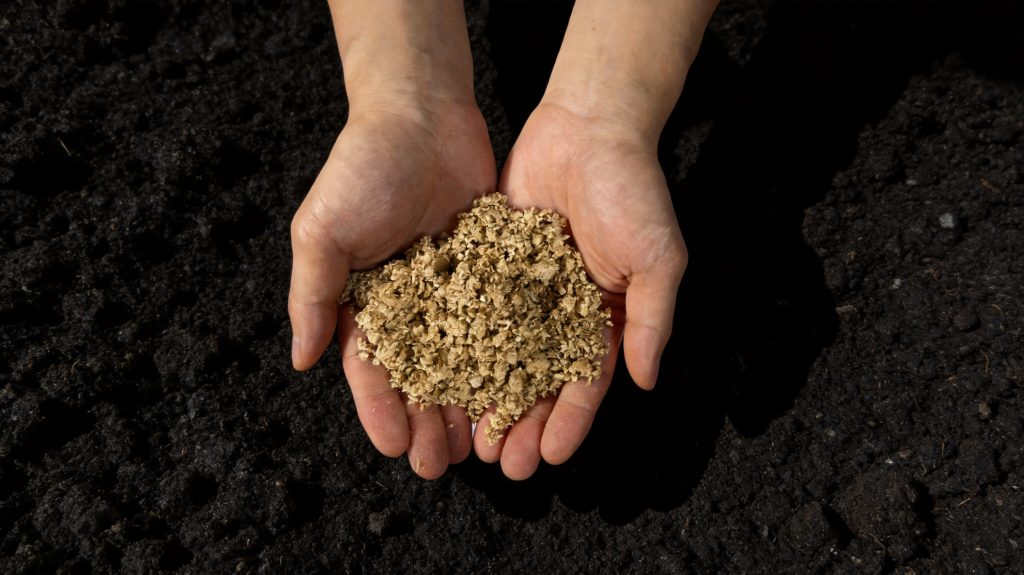
For foodservice operators, packaging distributors, and wholesalers, bamboo fiber offers a practical combination of strength, compostability, and regulatory advantages.
At Bamboolutions, we turn bamboo fiber into molded food packaging such as cup carriers, food trays, produce trays, and egg cartons.
In this article, you will learn:
- What is bamboo fiber
- Why bamboo is a sustainable raw material
- How we turn bamboo into disposable packaging
- Why more companies are switching to bamboo fiber
1. What Is Bamboo Fiber?
Bamboo fiber is a natural cellulose material made from bamboo plants.
Although bamboo looks like a tree, it is actually a grass. This is important because bamboo grows much faster than trees. It also produces long, strong fibers.
As a result, bamboo is an ideal raw material for compostable single-use food packaging.
2. Why Bamboo Is an Ideal Raw Material for Food Packaging
Bamboo has several qualities that make it well suited for food packaging.
Fast-Growing and Renewable
Bamboo grows quickly. Farmers cut mature stalks while leaving the root system in the ground. Soon after harvesting, new shoots grow from the same roots. Therefore, bamboo can be harvested again and again without replanting. This makes bamboo a highly renewable source of fiber.
No Deforestation Required
Paper packaging usually comes from trees. In many cases, tree harvesting involves forest clearing and more regulatory oversight. Bamboo grows differently. Farmers harvest the stalks without removing the plant or clearing forests. Because of this, bamboo is currently considered outside the scope of the European Union Deforestation Regulation (EUDR). As a result, importers may face fewer compliance requirements than with wood-based materials.
Reaches Full Strength in 2 to 3 Years
Most commercial trees take decades to mature. By contrast, bamboo reaches full mechanical strength in only two to three years. Therefore, manufacturers benefit from a faster and more stable supply of raw material.
Naturally Resistant to Pests
Bamboo contains natural compounds that help protect it from insects, mold, and fungi. As a result, growers often use fewer pesticides. This makes bamboo a cleaner crop and reduces environmental impact.
Requires Fewer Chemicals
Bamboo is naturally clean and resilient. Therefore, processors often need fewer harsh chemicals to produce food-grade pulp. This supports the production of PFAS-free packaging and gives brands a safer material option.
3. How We Convert Bamboo Fiber into Disposable Food Packaging
At Bamboolutions, we utilize advanced AI-controlled wet-press thermoforming technology to turn fiber into functional packaging.
- Pulping: Raw bamboo is processed into purified cellulose pulp.
- Molding: The pulp is deposited into precision-engineered molds.
- Thermoforming: We apply temperatures of up to 220°C and compression forces of up to 60 tons.
- Bonding: Under these conditions, the long fibers interlock into a dense, high-strength matrix while moisture evaporates instantly.
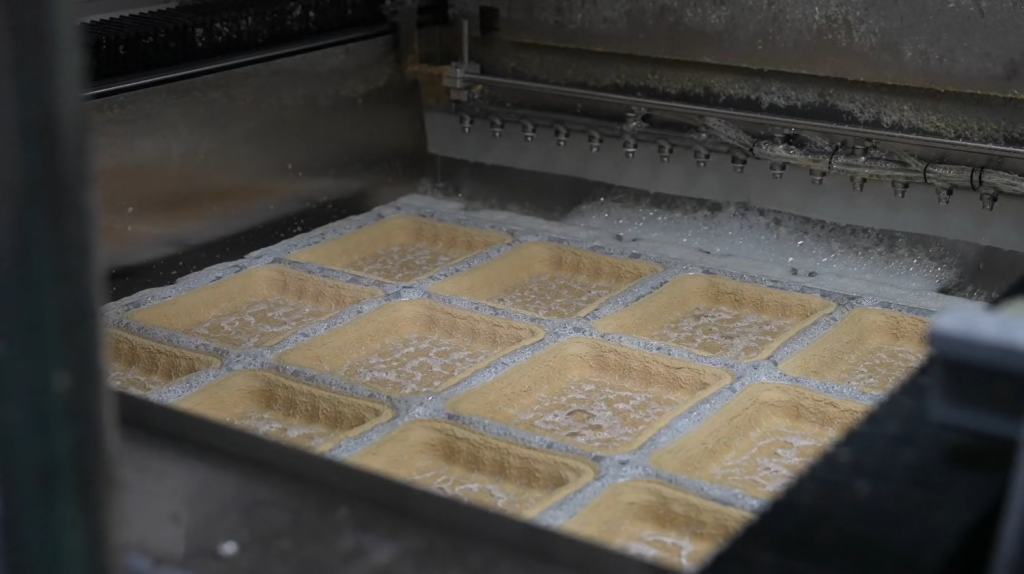
Our AI-controlled system monitors temperature and pressure throughout production.
4. Why Bamboo Fiber Is the Future
Bamboo fiber combines environmental ethics with high-end engineering performance.
| Benefit Category | Key Advantages |
| Environmental | Rapidly renewable, no deforestation, certified compostable and biodegradable |
| Health & Safety | PFAS-free, BPA-free, and reduced chemical processing. |
| Functional | Natural grease and water resistance, high tensile strength, lightweight, and microwave safe. |
Summary: A Practical Packaging Solution
As plastic bans expand and sustainability standards become stricter, companies need better packaging materials.
Bamboo fiber offers a reliable and scalable alternative. It combines strength, compostability, and a stable raw material supply.
For distributors, wholesalers, and foodservice brands, bamboo fiber is a practical way to reduce environmental impact without sacrificing performance.
Ready to Switch to Bamboo Fiber Packaging?
If you need bamboo fiber cup carriers, food trays, produce trays, or custom molded packaging, Bamboolutions can help.
We offer:
- OEM and ODM services
- Rapid tooling development
- Global supply chain support
- Certified compostable packaging
Contact us today to request samples and see how bamboo fiber can strengthen your packaging portfolio while supporting your sustainability goals.